I don’t know why I have it, or when I acquired it. I don’t think I’ve ever seen a picture of her wearing it. And I didn’t think, Wedding Dress, when I saw some linen stuffed into a small plastic bag. But it has a label. I took it out, spread it on a table, and started really looking at it.
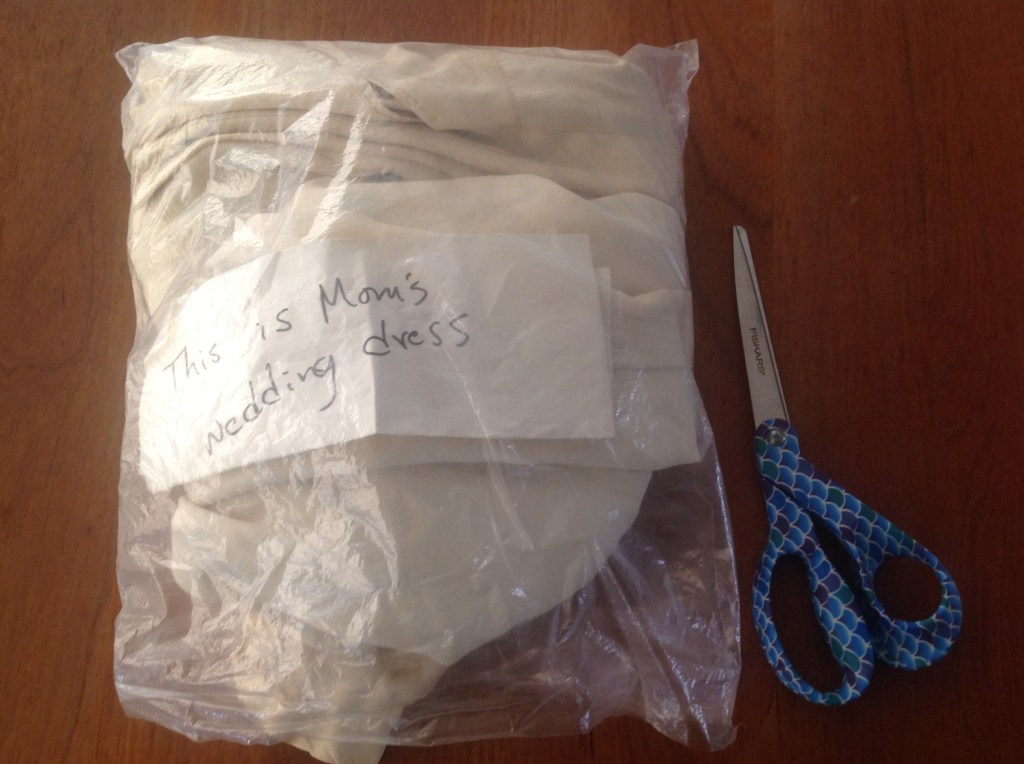
That handwriting suggests that the dress spent time in South Dakota, but maybe not.
I know the story. She was married in a rectory without a lot of ceremony, because her husband was Catholic, and she wasn’t. She didn’t have much money, so she made the dress.
And this is the outfit she made. It’s more than three quarters of a century old and the linen has yellowed. It needs bleaching and washing and ironing. Except I don’t want it to fall apart!
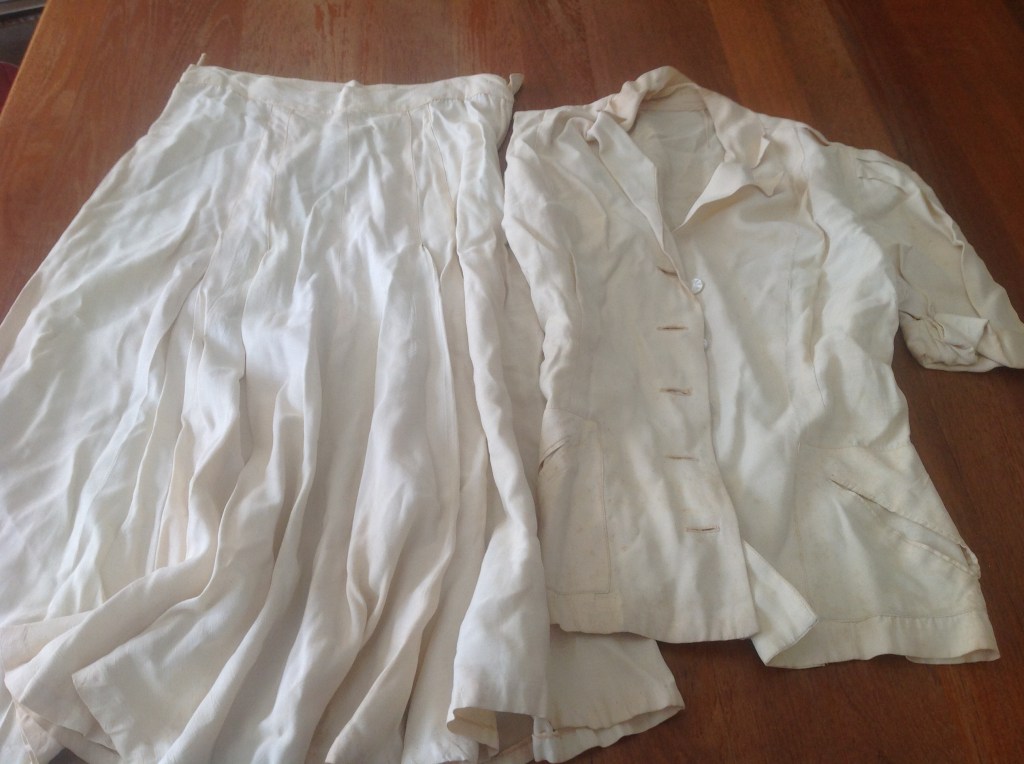
The closer I look, the more surprising it gets. It has a perfect set in collar. The sleeves are also set-in, and pleated with cuffs at the end. There’s a little shoulder support of buckram, or some other stiff material inside the top of the sleeve (it’s on the right in the picture). I turned the left sleeve inside out so you can see the curve of the shoulder support. It looks a bit muddled but rewards careful study.
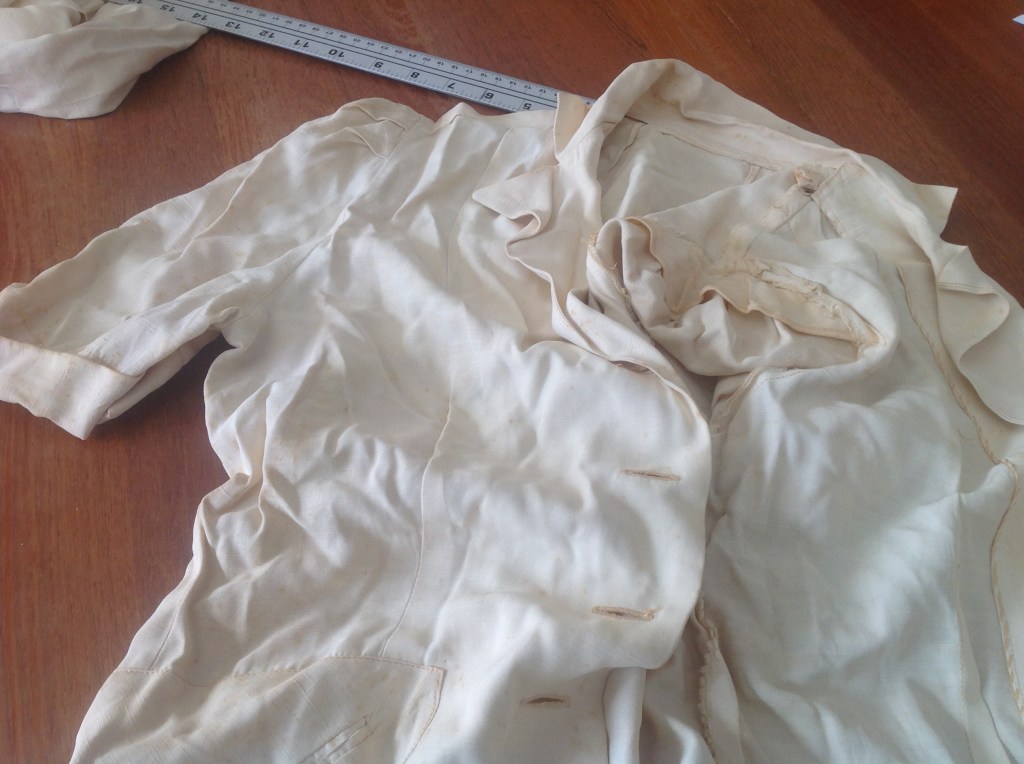
The front facing was folded back and stitched by hand with tiny, tiny stitches. You can just barely see it at the far right of the picture above. There are darts that shape the jacket, down from the neck and across the back. She did the buttonholes by hand …
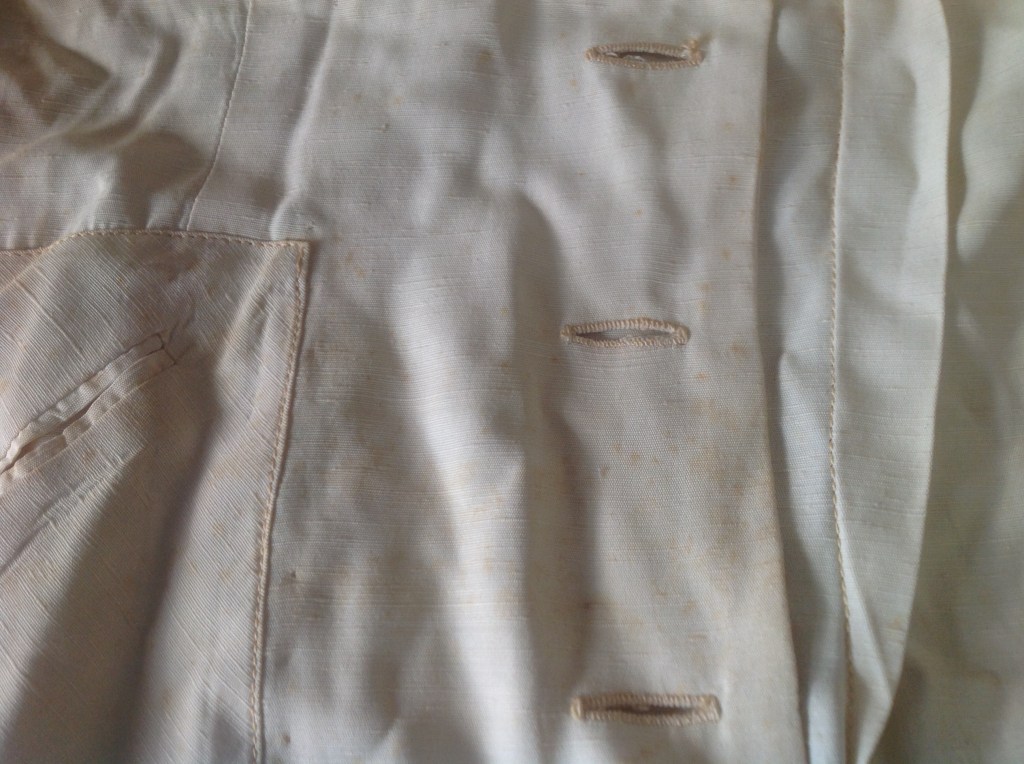
Closer look at buttonholes and edge of pocket slit. Also the back-shaping dart.
… and sewed on the pretty starburst buttons. The same tiny stitching appears along the hem of the skirt and the bottom of the cute jacket with its jaunty little pockets. The pockets are an odd shape, but it was on purpose, because both pockets are the same. The slit in the middle is an astonishing bit of work.
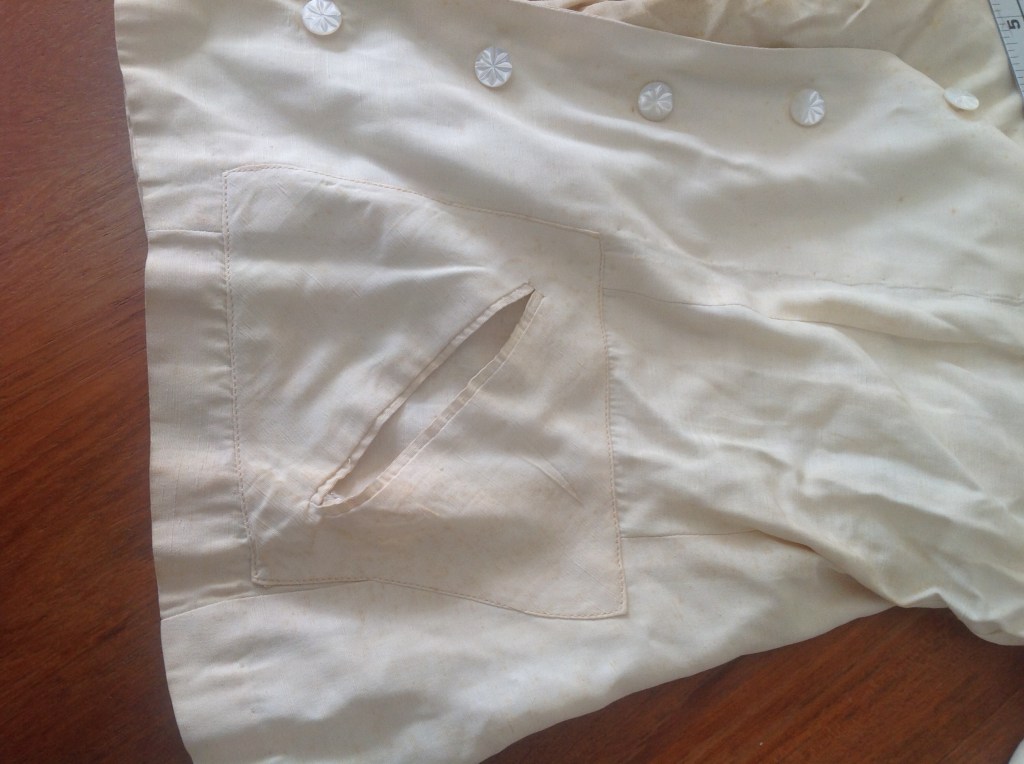
Check this out. She placed material on top of the pocket, sewed it down, made a slit, and turned the whole thing inside out. Then she did a little top stitch.
The skirt has four flared panels, and all the seams are meticulously pinked. The front includes four pleats, and the waistband measures about 24 1/2 inches. The zipper is lapped, carefully covered with a fold of cloth, so only a single seam shows. Nowadays, people sometimes install zippers on the outside, and call it fashion; this very discreet insertion is a testament to a different mind. I don’t know what the blue marks are. She added a skirt hanger loop!

The hemming is mysterious, with threads going every which way on the back and one tiny stitch appearing on the front. I folded the hem over to show both sides. Amazing. She tried to teach me how to do that stitch once. I seriously did not get it, but it makes a lovely hem.
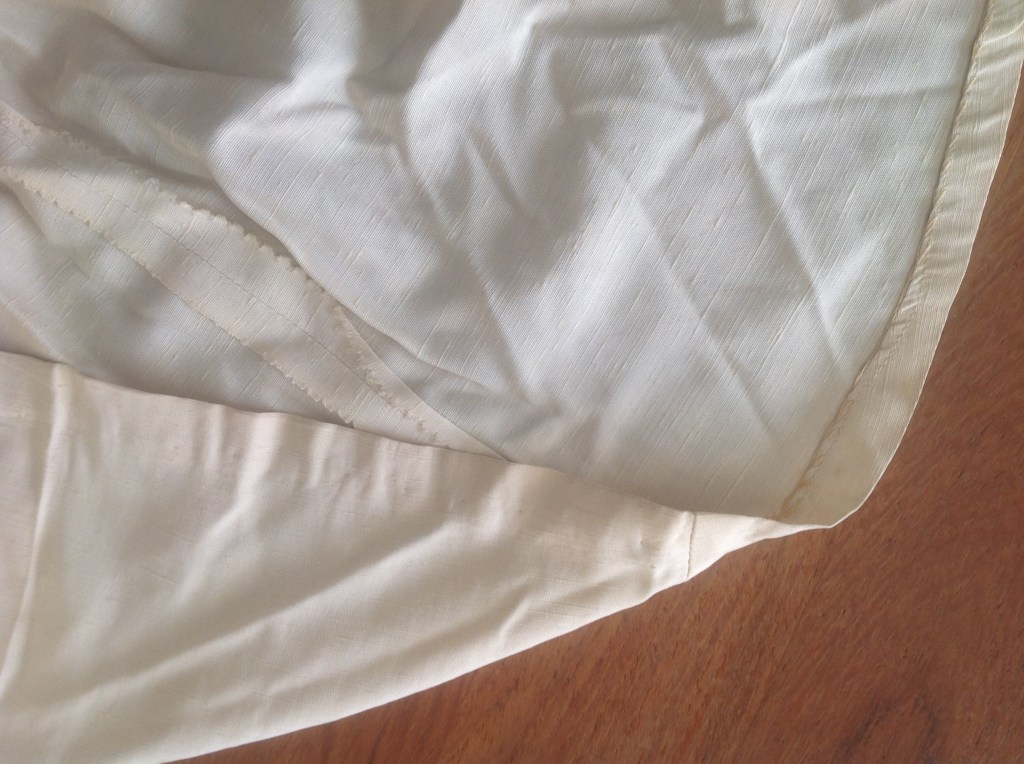
If she had more than a plain Singer sewing machine that went backwards and forwards, I’d be shocked. I sew a bit but never use a stitch that small because I’m terrified of having to rip out my work.
I don’t know when she learned to do this careful tailoring. I suppose if you grew up in the depression, it’s not terribly surprising, but she was more than good. Her dress belongs on a wall, washed and ironed, so it can be admired.
You were amazing, Mom!
 Janey's blog
This is amazing! (She is amazing!!)
LikeLike