There’s an idea floating around that science is all about experiments, in fact, that without experiments, there is no science. Certainly, experimentation is right up there, at the highest level of science, but there are whole branches of science where experimentation is not possible. Geology is one of them. No one is doing experimental continental motion. That’s okay. Experimentation is a capstone in a long process.
The way I describe science to myself is that there are six possible processes: observation, classification, prediction, invention, demonstration, and experimentation. For example, you can’t do an experiment without first doing, or at least seeing, a demonstration. You can’t set up the conditions for an experiment unless you know in a general way what is going to happen. In other words you did some very careful observation.
Invention makes observation much more potent. Think about telescopes, early ones or Hubble, looking at the heavens types. Think microscopes and then neutron microscopes. Sharper knives. Photography. Precise chronometers. Huge arrays of seismometers.
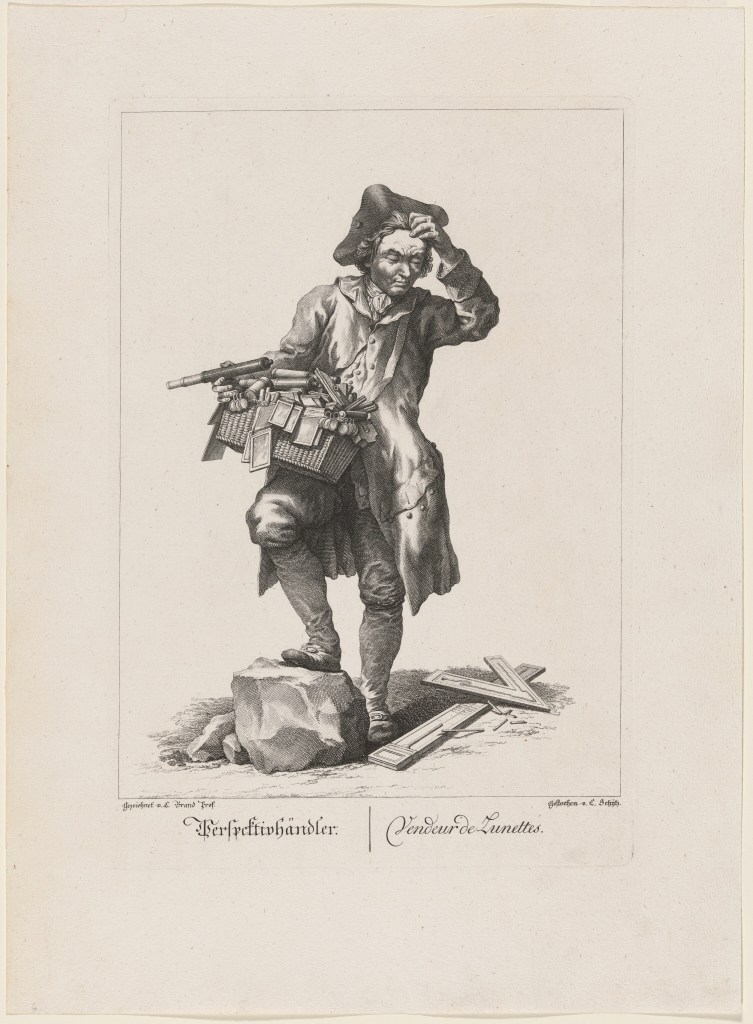
Perspektivhändler (Telescope Seller). 1775.
Carl Schütz, after Johann Christian Brand
Artist, Austrian, 1745 – 1800
National Gallery of Art, DC. public domain
I’m reading a book about biologists, Christian biologists, written by Niels Arboel. He is a Danish writer and teacher, and often discusses biology, religion, and political science. His book, The Wonder of Creation: The Most Famous Christian Biologists in History, includes twenty biologists from the 16th century forward. Each chapter includes a general biography of the life of the scientist in question along with a lot of direct quotes from said person. This is quite fascinating on its own.
Arboel also tries to place these men within the context of their times, including especially the scientific community. And he tries to show their significance to the long procession of scientific discovery. Hence, his essay on Francesco Redi, which opens the book, includes comments on Galileo who wasn’t a biologist and predated Redi, as well as Spallanzani who was a biologist and came after Redi.
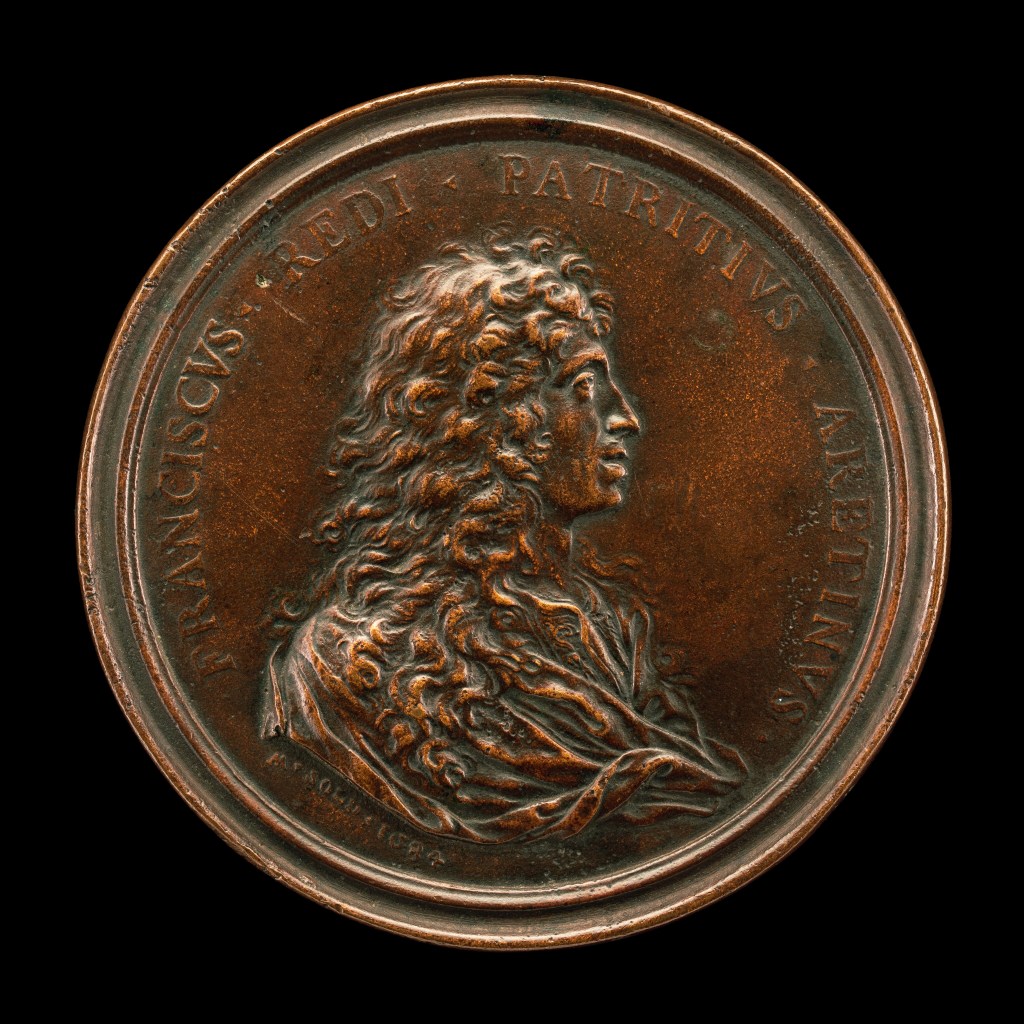
Francesco Redi, 1626-1697, Physician and Scientist [obverse]. 1684. By Massimiliano Soldani Benzi, Medalist, Florentine, 1656 – 1740
National Gallery of Art, DC. public domain
Since I haven’t finished the book I’m only going to say that Arboel’s discussion of several biologists, including two American professors, goes into great depth on their efforts to classify all kind of animals and plants. He showed clearly how the question of classification forced more and more careful observation, trying to understand which kind of classification would advance understanding.
The scientist I call Linnaeus he calls von Linné. Von Linné did a classification of plants that was based on the number of pistils and stamens in flowers. Many people, including Lamarck who is also in the book, argued with this classification, and found other better ways of doing the work. The other better ways produced more understanding of relationships between plants as well as more ability to identify them in the first place. Von Linné gets a lot of credit because it is so much easier to argue about why an idea is wrong than to come up with a new idea in the first place. Classification is often like that.
There’s a long discussion of evolution but I haven’t finished reading about all those scientists yet. It’s a fascinating book.
 Janey's blog