Like many people I’m shivering inside my house these days and doing things that seem suitable for this — much colder than necessary — weather. (And I’m not an AI. I hear that AI is fond of dashes but sometimes they are the right punctuation!) For instance, I’m cooking special things. Years ago, when my sister died, an old friend encouraged me by sending me a pot of jam from overseas, that she herself had made. She paid a fortune to do so, and it was wonderful and kind. We had a motto for the summer — Make Jam First. But in February, fresh jam with fresh fruit is… marmalade. So try it, she said.
My father used to have Chivers’ Old English Marmalade at breakfast, now and then, and we weren’t supposed to touch it. It was his treat. It was also the kind of thing that I was perfectly content to let him have, all to himself, after I had a taste of it. Not My Thing. Too bitter. And I don’t actually know whether my friend makes bitter marmalade, or sweet, or both. The jam she sent when I was unhappy was elderberry. But having looked deeply into the matter it became clear that you can make any kind of marmalade you want. Consequently, my jam is a lot sweeter than Chivers’ though it still has some bitter tang.
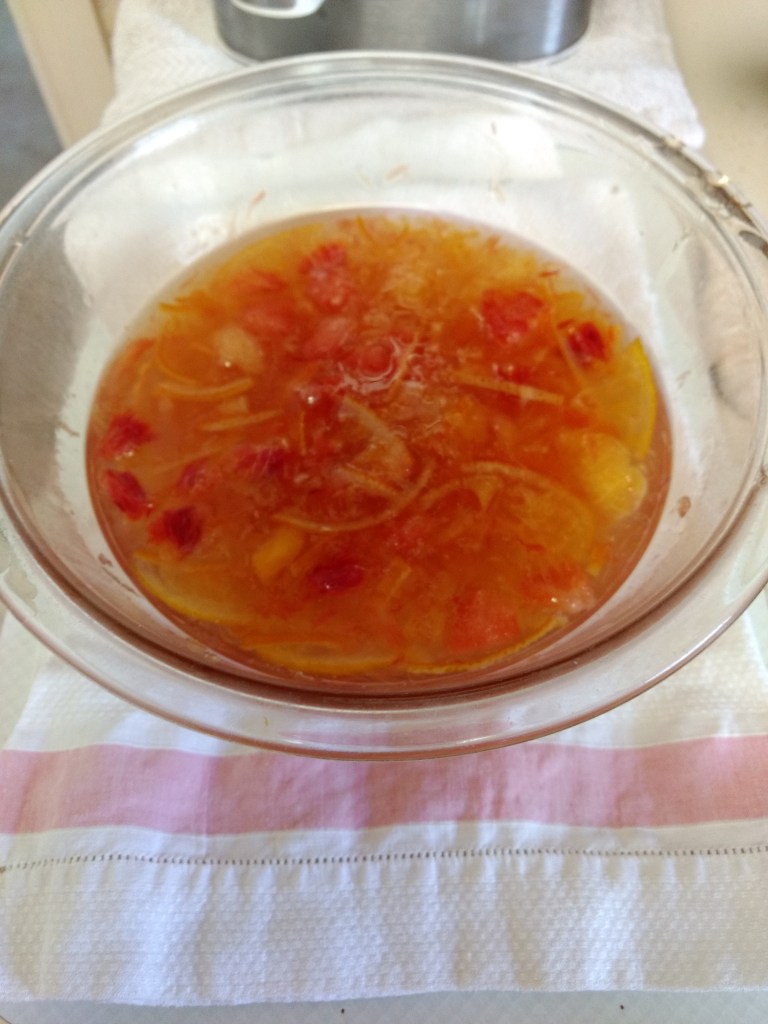
For my cold inspired efforts, I used Meyer lemons, a blood orange, and a star ruby grapefruit. I tried zesting the peel but, having started with the grapefruit I eventually gave that little operation the go-by. The grapefruit skin was so tough that after I had zested a little bit, I was completely fed up, and unsure about using the peel anyway. Instead I sectioned the grapefruit and put all the fruit bits aside. I peeled the pith off the outer skin and set that in a different bowl, then cut the skin into tiny slivers. At least, I did that for about half the grapefruit and then gave up. Again. The lemons I sliced as thinly as I could, peel and all. I tossed the seeds into the pith bowl. The orange I deal with somewhere in between these two extremes.
I let the peel and the lemon slices soak overnight and used cheesecloth to tie up the pith and seeds so they could also be soaked. I added water to the cheesecloth bundle and cooked that pith. It’s a great source of pectin so after cooking I squeezed it repeatedly and added the slippery goo to the jam pot.
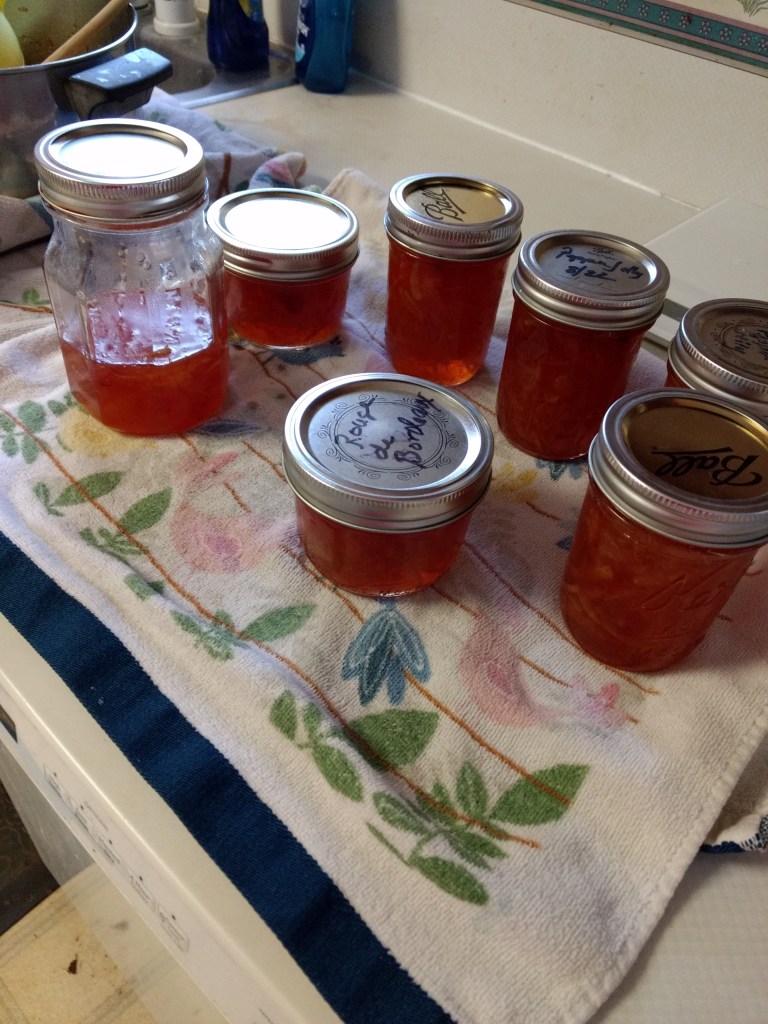
You can see the results above. Great taste, not too bitter, not too sweet. And you can see that I reuse my canning lids…
I made one more change. Several months ago I bought a good cooking thermometer, the kind that has a very thin metal tip and reads instantly. What a game changer for the jam! At 221º it’s the perfect texture. Light gel, not runny and not candy that takes a chainsaw to dig out of the jar, even if it tastes good.
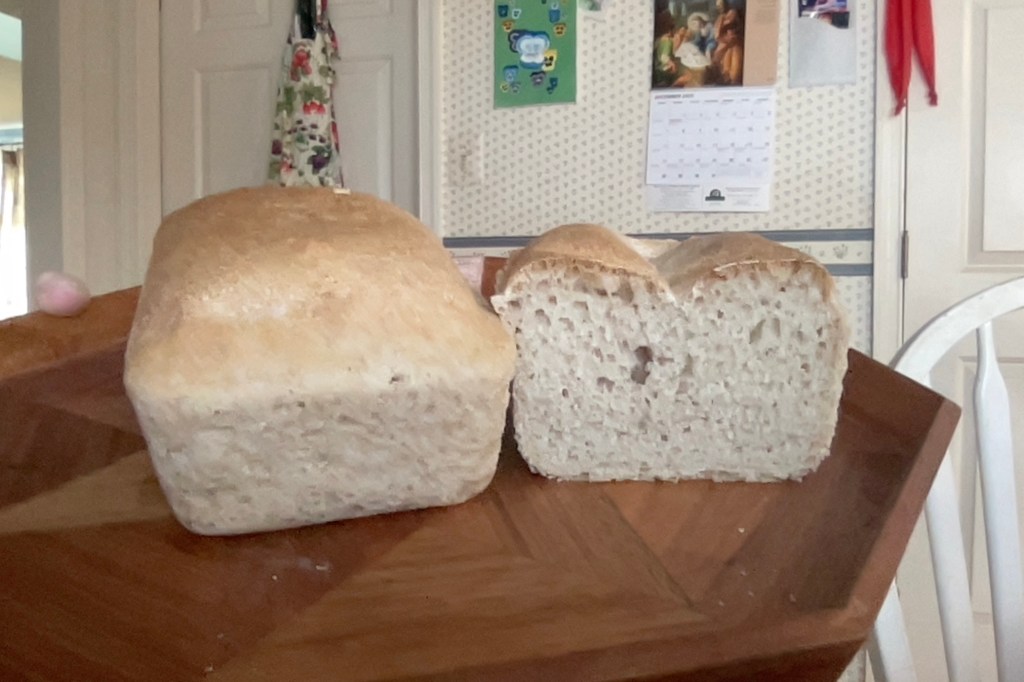
Such tender marmalade needed good fresh bread with spelt flour in it. Unfortunately I over proofed the dough and then tried to ‘slash’ the top. It did not quite work as intended. Instead the slash caused the whole loaf to sink. You can see the result on the right. But it still tasted good when fresh!
I don’t have any pictures of the Rice Krispie treat I also tried to make. I looked up extra recipes online because I had some marshmallows leftover from a camp fire with the grandchildren. PRO TIP. Do not make these treats with browned butter and dried up old marshmallows. The gooey part ended up like chewing gum, plus it was very sticky. When the, uh, mixture finally set up, it shattered if you tried to take a piece and then after chewing for a while you would have mouthful of sweet rubber. Time for warmer weather! Or more careful cooking.
If you need a book to amuse you in the snow, try mine. Here’s a link to Death Comes to the Science Fair! https://a.co/d/fINThHc
Header: Lemons by George Henry Hall, 1884. National Gallery of Art, public domain.
 Janey's blog