I read an article about someone else’s process for writing a book. That person has written twenty or thirty books minimum so it was kind of interesting. Unfortunately what it really showed was that writing is very individual. The way that author brought a book into being has nothing in common with how I write.
My own process is, or has been, quite straightforward. Have an idea. Think about it for years. Finally get it down on paper and add four thousand commas. The books I’ve written recently, like Jessamyn and Death Comes to the Science Fair, are stories that I had in mind since 2018, more or less, and the book I published in 2016 was on my mind for at least ten years before that.
That brings me to the current Work in Progress. This little operation could be considered a sequel to Death Comes to the Science Fair, or it could be thought of as a story in the same setting. It will depend on what I write, won’t it? However, in the writing I am totally constrained by the words I already used in the first book. This character has black hair, that character can sing, and the science teacher wears a lot of blue and white.
Also, I don’t want to work on the story for five years. I sit down every day to write, which honestly, is the real answer to becoming a writer, no matter how unoriginal it is to say so. But that means that when I have used up the ideas from 2018, which blotted out all new thoughts while I chewed on them, I have to write into the dark, and think about my plotting much more quickly.
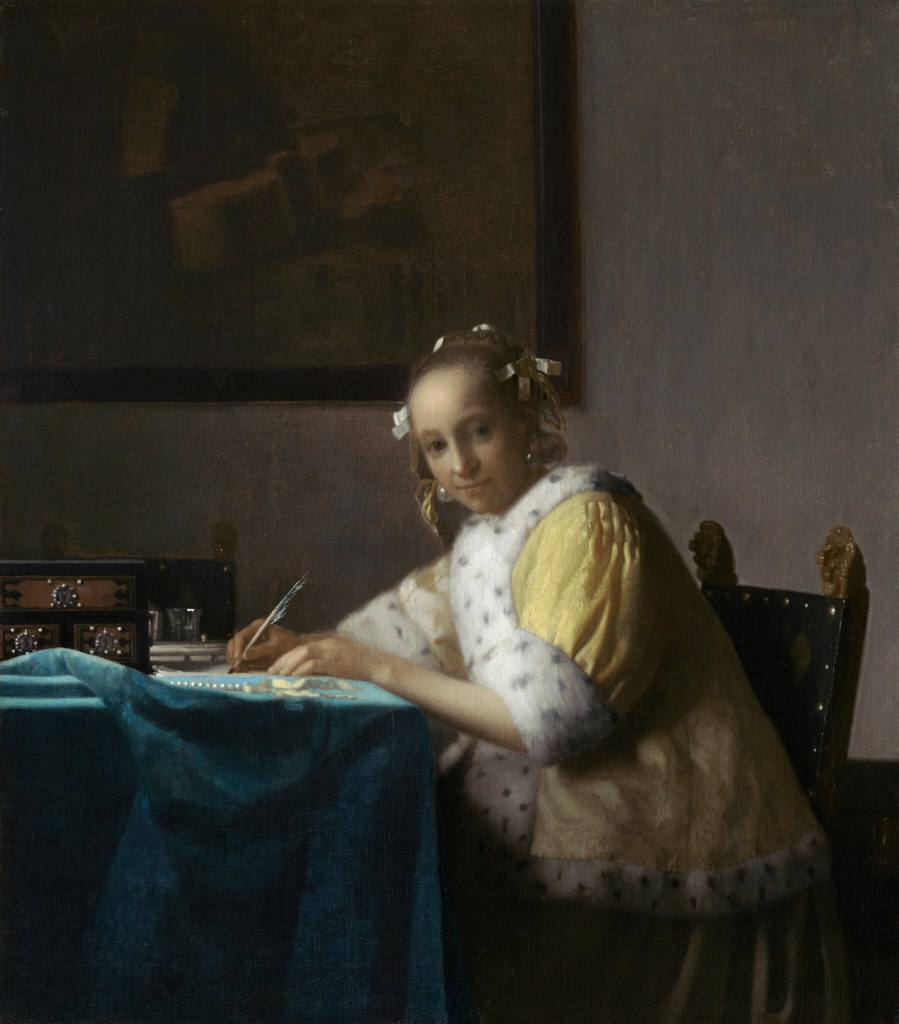
This is Vermeer’s take on the matter from the National Gallery of Art. My heroine is at a folk festival where she can learn ten different methods for making shoelaces, watch someone forge a sword, play chess, enter a dance contest, and learn a new dance or two. There are local writers there, but she is not interested. She is trying to forget about a lost will and her nephew getting knocked around, and the tiresome parents at her school.
And then while I am doing that I forget that it is Friday!
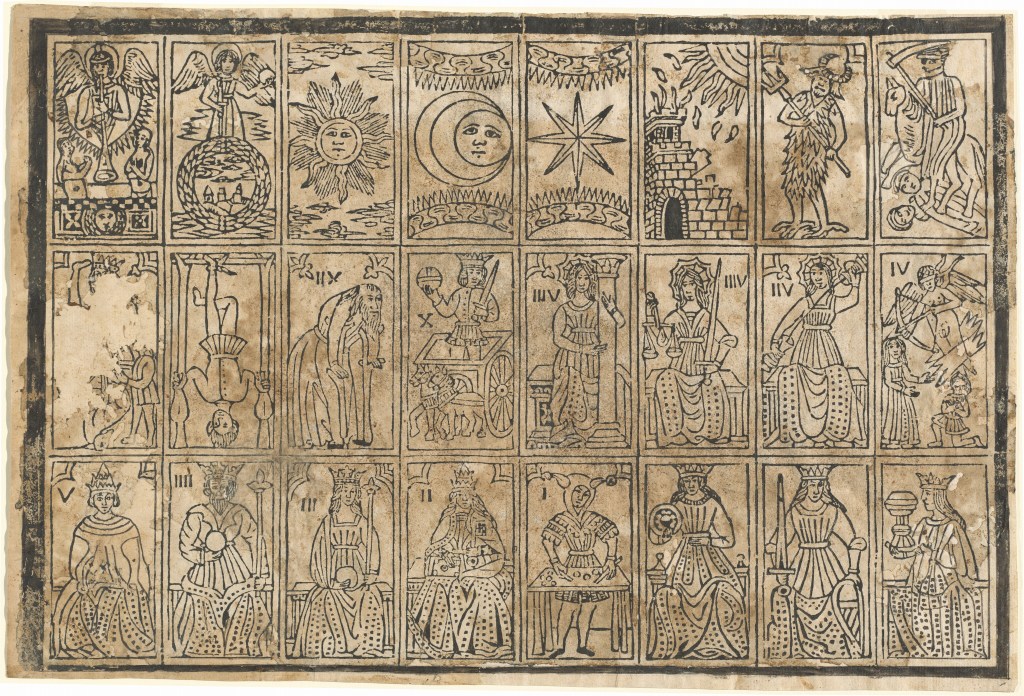
Also, I have discovered that playing solitaire with a real deck of cards seems to loosen some of my thinking. Something about moving my hands in a larger motion than typing, sparks plot points. Playing on the computer does not have this effect. Quite the opposite.
Picture of a 15th century deck of cards from Italy, National Gallery of Art, Washington DC
 Janey's blog